
It’s easy to brush off a little blood when you’re flossing or brushing your teeth. Maybe you were too aggressive, maybe you just haven’t flossed in a while. But bleeding gums that happen regularly aren’t something to ignore — they’re one of the earliest and most important warning signs your mouth can send you.
Gum disease is far more common than most people realize. Studies suggest that nearly half of adults over 30 have some form of it, and many don’t know. The problem is that gum disease tends to progress quietly. By the time it causes noticeable pain or tooth mobility, it’s often in a more advanced stage than it needed to reach.
What Is Gum Disease?
Gum disease, also called periodontal disease, is an infection of the tissues that surround and support your teeth. It begins with plaque — the sticky bacterial film that constantly forms on your teeth. When plaque isn’t removed through regular brushing and flossing, it hardens into tartar, which can only be removed by a dental professional. The bacteria in plaque and tartar irritate the gums, causing inflammation, and that inflammation is the beginning of gum disease.
The early stage is called gingivitis, and the good news is that it’s completely reversible with proper care. Gingivitis typically presents as red, puffy, or tender gums that bleed easily. If gingivitis is left untreated, it can advance to periodontitis — a more serious infection where the gums pull away from the teeth, bone is lost, and teeth can eventually loosen or fall out.

Beyond Your Mouth: The Systemic Connection
What makes gum disease particularly important to address is that its effects don’t stay confined to your mouth. Research has consistently found links between untreated gum disease and a range of serious health conditions, including heart disease, type 2 diabetes, respiratory illness, and complications during pregnancy. The bacteria associated with gum disease can enter the bloodstream and contribute to inflammation throughout the body.
This connection is one of the most compelling reasons regular dental cleanings are about more than just a clean, polished smile — they’re an investment in your overall health.
What to Watch For
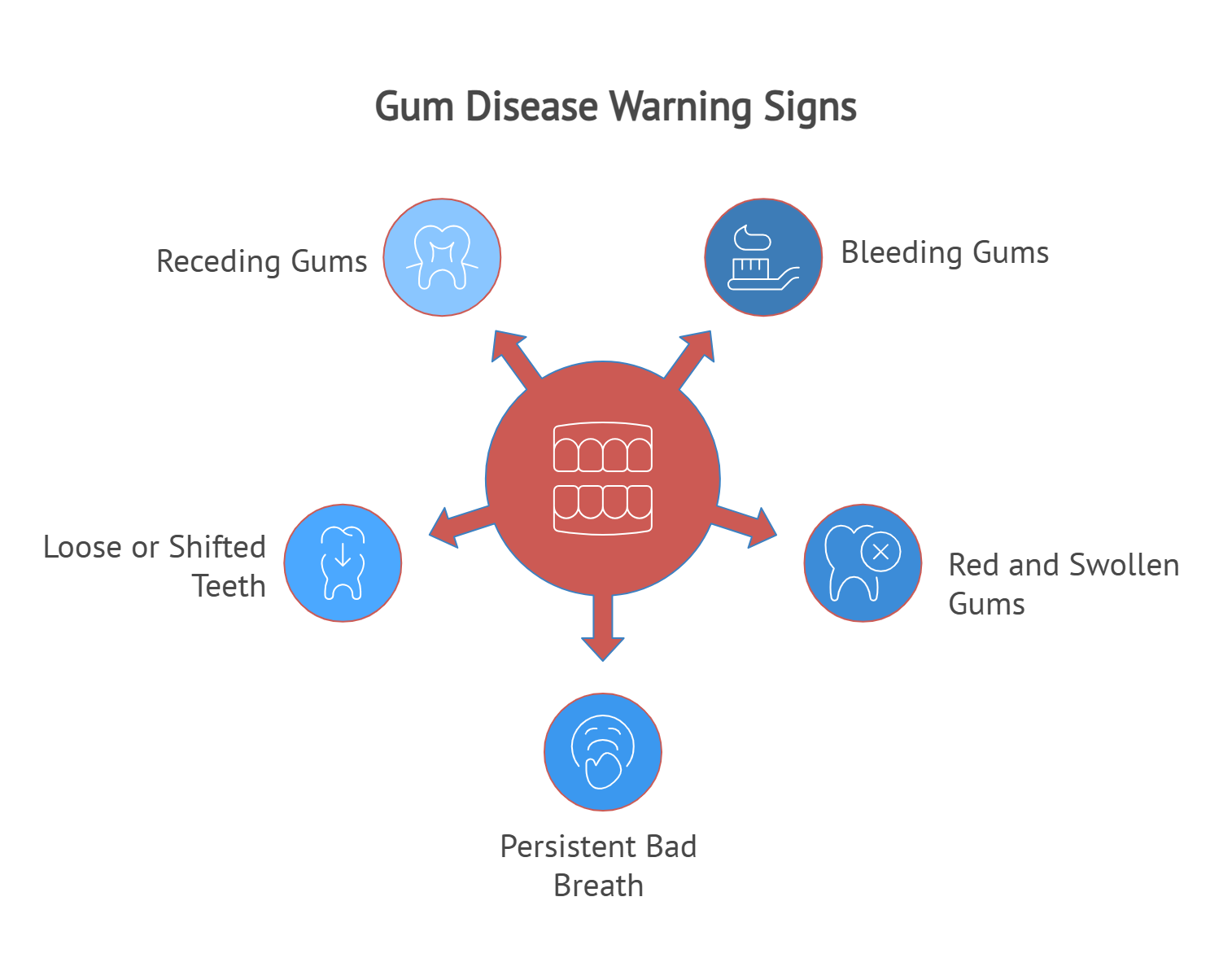
Gum disease doesn’t always hurt, especially in its early stages. Some of the signs to pay attention to include gums that bleed when brushing or flossing, gums that look red, swollen, or puffy rather than their usual firm pink, persistent bad breath that doesn’t improve with brushing, teeth that feel loose or have shifted position, and gums that appear to be pulling away from the tooth, making teeth look longer than they used to.
If any of these sound familiar, it’s worth mentioning at your next visit. Early treatment is significantly simpler and more effective than addressing advanced gum disease.
How We Treat and Prevent Gum Disease
The foundation of gum disease prevention is consistent professional care. Regular cleanings allow us to remove tartar buildup that your toothbrush simply can’t reach, and they give us the opportunity to spot early changes in your gum tissue before they progress. For patients with more advanced gum disease, a deeper cleaning called scaling and root planing removes bacteria and deposits from below the gum line, giving the tissue a chance to heal.
Alongside professional care, daily habits at home make a significant difference. Brushing twice a day, flossing daily, and using an antimicrobial rinse if recommended all reduce the bacterial load in your mouth and support healthier gums over time.
Healthy gums are the foundation of a healthy smile. If it’s been a while since your last cleaning, or if your gums have been bothering you, reach out to our St. Catharines office. We’ll take a thorough look and make sure you have everything you need to protect your smile for the long term.